
World Cup Finally Kicks Off, But FIFA’s Engineered Ticket Market Is Still Under Scrutiny
Months of backlash over prices, inventory control, resale fees and access disputes may fade once matches begin. But state investigations…
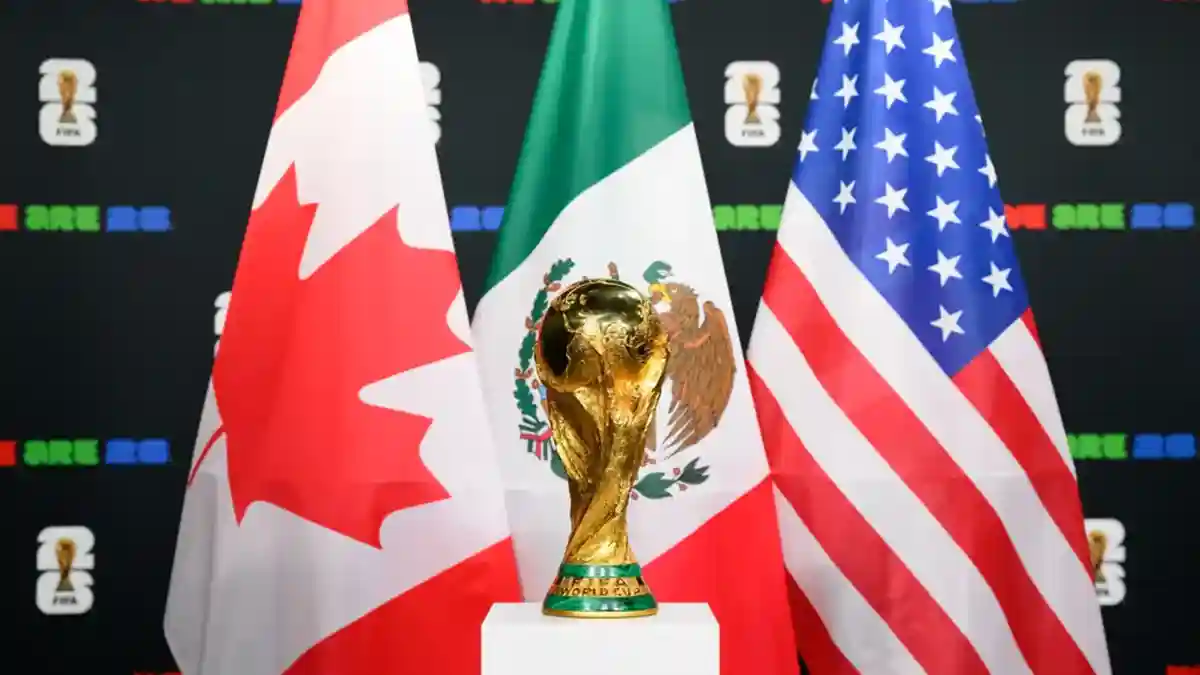
Months of backlash over prices, inventory control, resale fees and access disputes may fade once matches begin. But state investigations and late ticket controversies show the issue is not going away.
The World Cup is finally here.
After months in which the 2026 tournament often looked less like a global celebration and more like a case study in how far an event operator can push a captive market, play begins Thursday with Mexico facing South Africa at Estadio Azteca.
For FIFA, it may be the first real opportunity to change the subject.
The question is whether the games themselves can make fans forget the sales process that preceded them.
No World Cup arrives without controversy, and no tournament on this scale was ever going to be inexpensive. But the ticketing backlash surrounding the 2026 World Cup has been unusual even by FIFA standards.
It has combined extremely high primary prices, demand-based pricing, official resale fees, shifting seat-category complaints, reports of softening demand, and fan frustration over travel and hospitality costs — along with active scrutiny from attorneys general in four key host-state markets.
By the time the tournament kicked off, the phrase “World Cup tickets” had become shorthand for a broader argument about who this event was actually built to serve.
FIFA’s defense has been that it is responding to the market. FIFA President Gianni Infantino has argued that the tournament is taking place in one of the world’s most developed entertainment markets, and that pricing must reflect that reality. FIFA also tried to argue that selling tickets too cheaply would simply allow resellers to capture the upside instead.
But that explanation only goes so far.
The 2026 World Cup ticket market is not some neutral, naturally occurring force that FIFA merely discovered. As pointed out in a recent Fortune article, FIFA controls the primary ticket inventory, when it is released, and the official resale platform. It decided to allow uncapped resale pricing in the United States and Canada, collects fees on official resale transactions, and has been accused by regulators of using ticket-release practices and public statements that may have contributed to inflated prices.
That makes the more precise question not whether “market rates” exist, but who designed the market, who controls the supply, and who profits from the opacity.
That distinction matters because FIFA is not just a seller reacting to demand. It is the market-maker.
Economists quoted by Fortune push the critique further, arguing that the problem is structural. When a ticket seller controls supply, release timing, primary prices and the official resale system, the resulting “market rate” is not merely a reflection of fan demand but the product of rules, incentives and information controlled by the organizer.
That point is especially important amid reports and public speculation about World Cup inventory movement. Fortune reported that a large drop in available inventory on FIFA’s official portal was followed by tickets appearing on secondary marketplaces, including large contiguous blocks that some observers said did not resemble ordinary fan resale behavior. StubHub and SeatGeek denied having a partnership or distribution agreement with FIFA, and FIFA has not publicly confirmed such a strategy. But the broader concern remains: when the primary seller controls the ticket supply and prices remain high on the official channel, consumers have little visibility into whether scarcity is organic, manufactured or simply managed.
TicketClub marketplace data published Thursday suggests the current resale market is more complicated than the simplest version of the backlash. Prices have cooled from the speculative peaks seen earlier this year, but they have not collapsed into a bargain market. According to TicketClub, the median asking price for group-stage tickets was $994 as of June 11, down 23% from $1,291 on Feb. 19. The median asking price for the final at MetLife Stadium was $10,757, down 35% from $16,504 in February.
That softening is meaningful. It suggests some early prices were aspirational, particularly before matchups, team paths and buyer demand had fully settled. But TicketClub’s data also shows the market firming again as kickoff approaches. The group-stage median rose from $812 on June 3 to $994 on June 11, and several knockout-round medians moved higher in the final week before play began.
The market is not sending a single clear signal.
There are still accessible entry points for flexible buyers, with TicketClub showing a group-stage get-in price of $164 and several lower-demand matches carrying medians below $500. But the premium end remains severe. The World Cup Final had a get-in price of $7,686 and a median asking price above $10,000 as of Thursday.
For FIFA, that bifurcation may be the business model working as designed. For fans, it has often felt like something else entirely.
The Associated Press, in a story published by Fortune, reported that some veteran traveling supporters are skipping the tournament because of ticket prices, travel costs and concerns about entering the United States. One longtime England supporter told the AP that the culture around these tournaments has always depended on ordinary fans moving between hostels, bars, fan zones and stadiums — and that the 2026 pricing environment has pushed many of those fans out of the market.
The sticker shock is not limited to the most desirable matches. AP reported that lower-tier Category 3 tickets to group-stage matches were $69 four years ago, while FIFA has sold comparable tickets for as much as $265 this year. That is before fans account for travel across three countries, hotels, local transportation, paid fan experiences and the other costs that come with following a national team across a sprawling North American tournament.
That concern goes beyond whether a particular game sells out. A World Cup can still generate enormous ticket revenue while becoming less accessible to the traveling supporters who help define it.
Expensive tickets do not just change who gets inside the stadium. They reshape who can justify the trip, how long they stay, how many matches they attend, and whether the tournament feels like a global supporters’ gathering or a luxury sports product.
Reuters reported Thursday that the expected tourism surge has been slower than anticipated in some U.S. markets, with hotels and airlines seeing weaker demand as high ticket costs, visa hurdles and the logistical difficulty of a three-country tournament discourage some travelers. The report cited flight bookings from Europe into most host cities as down year-over-year and noted that some New York hotel expectations had been cut sharply ahead of the final.
The same tension was central to a recent column by Scott Stinson of the National Post, which framed the 2026 tournament as a broader exercise in fan gouging and public-cost escalation. Stinson pointed to steep match prices, paid fan experiences, parking and transit costs, and major public expenditures in Canadian host cities as part of the same pattern: FIFA and its partners extracting maximum value while fans and taxpayers absorb the burden.
That criticism has been amplified by FIFA’s own ticketing choices. Unlike recent World Cups where official resale rules capped sales at face value, FIFA has allowed fans to list tickets at market prices through its own resale system in the United States and Canada, while taking a 15 percent fee from both the buyer and seller. FIFA’s argument has been that underpricing tickets would simply hand profits to resellers. But its role as operator of the official resale marketplace makes that argument harder to separate from its own financial interest in a high-priced market.
The latest access controversy came just days before kickoff, when Iran’s football federation said its ticket allocation had been withdrawn, leaving supporters who had already made travel plans unable to obtain tickets through the official federation process. Reuters reported that each participating federation receives 8 percent of the tickets for its matches to allocate to fans according to its own criteria. Iran’s federation said the move raised questions about political interference, while FIFA said it was working with Iran to identify compliant solutions to maximize opportunities for Iranian supporters to attend matches.
The Iran episode is distinct from the pricing fights in the United States and Canada. It is entangled with geopolitics, visa uncertainty and the broader regional conflict that has shadowed Iran’s participation. But it still belongs in the same broader conversation about access. The World Cup ticketing system is not just about price. It is about who controls entry, how transparent that process is, and what recourse fans have when access changes after plans are made.
Ticketing is no longer merely a public-relations issue. It has become a consumer-protection issue.
California Attorney General Rob Bonta sought information from FIFA in May over reports that fans may have bought tickets based on seat-category representations that later changed before seat assignments were issued. Texas Attorney General Ken Paxton opened a similar investigation this week, focused on whether fans were misled about seat locations and whether FIFA may have violated the Texas Deceptive Trade Practices Act.
New York Attorney General Letitia James and New Jersey Attorney General Jennifer Davenport have gone further, subpoenaing FIFA as part of an inquiry into ticketing practices tied to MetLife Stadium, the New Jersey venue that will host eight matches, including the July 19 final. Their offices cited reports that fans did not receive the seats they believed they were buying and that FIFA’s ticket releases and public statements may have contributed to soaring prices.
That means the tournament begins with open ticketing inquiries in California and Texas, the two most populous states in the country, and in the New York/New Jersey host market for the final. Even if the backlash fades from everyday fan conversation once the ball is rolling, it has not disappeared from the legal or regulatory calendar.
This is the central tension of kickoff day.
Soccer has a way of overwhelming everything around it. A dramatic host-nation opener, an upset, a breakout star, a late winner, or a deep run by Mexico, Canada or the United States could quickly push months of ticketing anger into the background. Fans furious about prices in April may still find themselves watching every match in June. Some who swore off FIFA’s sales process may still buy late if prices drop or if their team advances.
That is the advantage FIFA has always had. The product is the World Cup.
But the 2026 ticketing story has exposed something that is unlikely to be forgotten by the ticketing industry, consumer advocates or regulators. FIFA did not simply discover that demand was high. It built a system around scarcity, variable pricing, delayed releases and a monetized official resale market, then defended that system by pointing to the resale economics it chose to participate in.
Now the tournament is here, and the test changes.
If stadiums are full, broadcasts are vibrant and fans pack host cities, FIFA will claim vindication. The backlash may look like pre-tournament noise from people who were always going to complain about prices but not powerful enough to dent demand.
If noticeable empty seats appear, late inventory continues to surface, or lower-demand matches keep sliding while premium games remain out of reach, the picture will be less flattering. It would suggest that FIFA did not merely charge what the market would bear, but misread key parts of the market while alienating many of the supporters who make the event feel like the World Cup in the first place.
Either way, kickoff does not close the book. It only changes the chapter.
After months of messy ticketing, soaring prices, shifting inventory, access disputes and government scrutiny, the World Cup finally has soccer to offer. That may be enough to change the mood. It will not resolve the questions surrounding FIFA’s ticketing operation.
Read next
More headlines
Jun 12, 2026
FIFA Faces Fresh Attendance Questions After Empty-Seat Images Circulate
FIFA’s expanded World Cup has barely kicked off, but images circulating on social media are already raising questions about fan…
Jun 12, 2026
Jinkx Monsoon Returns to ‘Oh, Mary!’ for West End Engagement
Jinkx Monsoon is set to return to the role of Mary Todd Lincoln in the West End production of “Oh,…

Jun 12, 2026
Bleachers to Offer $30 Discounted Tickets to Madison Square Garden Show
The alt-rockers of Bleachers announced a limited number of discounted tickets to their upcoming gig at New York City’s Madison…